
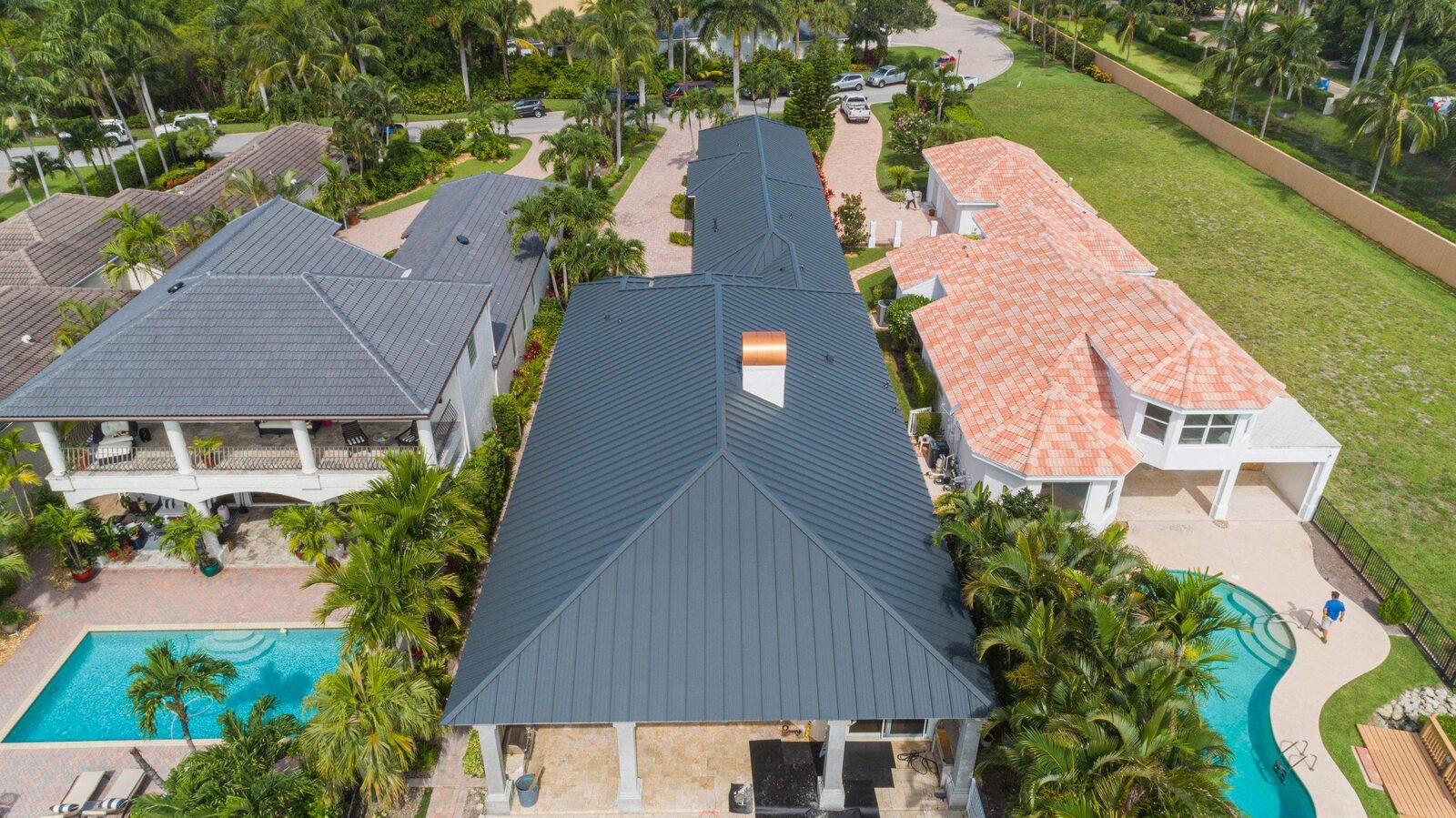
Overview
See summary; this entry documents installation methodology rather than a single product.
Specifications
| Materials | 26-29 gauge steel (exposed fastener panels), 24-26 gauge steel (standing seam panels), 0.032-0.040 aluminum (coastal standing seam), Wood furring strips/battens (1x3, 1x4 typical), OSB or plywood solid decking, Synthetic underlayment / #30 felt, Self-adhered ice-and-water shield, Pressure-treated lumber (furring, requires isolation barrier from metal) |
|---|---|
| Profiles | Exposed fastener: corrugated, PBR (Purlin Bearing Rib), 5V-crimp, R-panel, Concealed fastener/standing seam: snap-lock, mechanical (single/double lock), nail-strip |
| Gauge / thickness | Exposed fastener: 26-29 gauge steel typical residential; Standing seam: 24-26 gauge steel typical residential,.032\"-.040\" for aluminum |
| Panel widths | Exposed fastener panels: commonly ~36\" coverage width; Standing seam panels: commonly 12\"-19\" coverage width (16\"-18\" typical residential) |
| Material cost | $1.2–$5/sq ft |
| Lifespan | 20–50 yr |
| Wind rating | Standing seam with concealed floating clips generally achieves higher wind-uplift ratings (commonly 120-180+ mph rated systems, UL 580/1897 tested) than exposed-fastener panels because clip spacing/engineering is engineered per system and face fasteners are less prone to backing out; systems installed as a 'complete and separate roofing system' per IRC R907.3 exception (structural attachment through furring/purlins to framing, not resting on old roof) can carry documented wind ratings independent of the old roof. |
| Fire rating | Not covered in detail by sources reviewed for this specific research target; general note - metal panel assemblies typically achieve Class A fire ratings, but installing over combustible shingle layers may affect the tested assembly rating versus over solid deck per manufacturer listings; verify with panel manufacturer's UL/ASTM E108 assembly documentation for the specific over-shingle configuration. |
| Hail performance | Not directly differentiated by attachment/decking method in sources reviewed; hail performance is driven more by panel gauge, profile, and substrate rigidity (solid deck with underlayment cushioning generally outperforms open purlin for denting resistance) than by overlay vs tear-off per se. |
| Weight | Overlay adds the weight of furring/battens plus new panel layer on top of existing shingle layer(s); standing seam over solid deck after tear-off removes old shingle dead load first. Metal panels themselves are light (~0.5-1.5 lb/sq ft) vs asphalt (~2-4 lb/sq ft per layer), but codes still cap layers regardless of new roof's own light weight. |
| Fastener type | Exposed fastener: face screws with EPDM/neoprene sealing washers, spaced ~12-24\" on panel ribs/flats, penetrate panel face into deck or purlin. Standing seam: concealed clips (fixed one-piece or floating two-piece) screwed to deck/purlin, panels snap-lock or mechanically seamed over clips with no face penetrations; some nail-strip hybrid panels use a fastener flange hidden under the interlocking seam. |
Pros
- Overlay/roof-over avoids tear-off demolition and disposal costs and landfill waste, saving roughly $1.20-$4.00/sq ft and shortening project timeline
- IRC allows metal panel installation directly over existing shingles or wood shakes (R907.4) in many jurisdictions when it is the first added layer and roof is structurally sound
- Furring-strip (batten) overlay systems create a ventilated air gap between old shingles and new metal panels, improving drying potential, reducing heat transfer, and dampening rain noise
- Standing seam systems using floating/two-piece clips accommodate thermal expansion and contraction independent of the substrate, reducing oil-canning and fastener fatigue over time versus fixed clips or exposed face fasteners
- A properly engineered standing-seam overlay attached through furring to the structural framing can qualify under the IRC R907.3 'complete and separate roofing system' exception, avoiding the layer-count tear-off trigger entirely and carrying its own independent wind/structural rating
- Exposed-fastener panels are simpler, faster, and cheaper to install than standing seam, useful for garages, barns, and budget-conscious residential jobs
- Tear-off (full replacement) allows inspection and repair of the deck, resolves trapped-moisture and rot risk, and generally qualifies for full manufacturer warranties and longer service life
Considerations
- Most US jurisdictions cap roof coverings at two existing layers under IRC R907.3; a roof that already has two shingle layers requires full tear-off before any new roofing (including metal) can be added
- Overlay adds dead load to the structure; framing must be verified adequate for the combined weight of old shingles + furring + new metal panels, especially in snow-load regions
- Overlaying without removing shingles risks trapping moisture, mold, and existing leaks/rot under the new metal roof where they become undetectable and can worsen over time
- Overlay may void or restrict manufacturer weathertightness/finish warranties unless written pre-approval is obtained, since most warranties specify acceptable substrates
- Direct-to-shingle exposed-fastener attachment (without furring or a barrier layer) risks the shingle grit wearing through the panel coating from expansion/contraction friction, requiring a #30 felt, synthetic underlayment, or foil-faced insulation barrier
- Pressure-treated furring lumber's copper compounds can corrode metal panels in direct contact; requires an isolating underlayment barrier between treated wood and metal
- Standing seam panels generally require a solid deck (OSB/plywood, or continuous furring achieving an equivalent solid nailable surface) for snap-lock profiles; open purlins are only rated for certain clip-lock or structural profiles at limited spans (commonly up to 36"-60" depending on panel/gauge), limiting design flexibility versus exposed fastener panels
- Exposed-fastener systems do not accommodate thermal expansion/contraction well since screws penetrate the panel face directly; over time this can enlarge fastener holes and cause leaks, requiring periodic re-torquing/gasket replacement
- Local codes vary significantly (some jurisdictions allow only one existing layer before requiring tear-off for any new roofing); inspectors may require structural calculations especially in snow-load regions or on older framing
- Selling a home with an undocumented or code-noncompliant overlay can create disclosure, financing, or resale problems
Sherwin-Williams Finish
Not applicable to this installation-method research target (no specific Sherwin-Williams coating system data was researched here).
What Drives Installed Cost
Complete tear-off replacement typically costs $1.20-$4.00 per sq ft MORE than an overlay (recover) job, primarily due to tear-off/demo/disposal labor running $1.00-$5.00 per sq ft. Overlays can save roughly $50-$100 per SQUARE (100 sq ft) upfront versus tear-off but shingles overlay typically only lasts about half as long as a proper tear-off assembly. Separately, overall installed metal roofing (materials+labor) runs $5-$16/sq ft vs $3-$5/sq ft for asphalt shingles; metal installation labor alone runs about $3.00-$5.00/sq ft vs $2.00-$3.00/sq ft for shingles, reflecting the need for specialized crews. Source: HomeGuide 2026, Mr. Roof 2025 (https://homeguide.com/costs/metal-roof-vs-shingles-cost, https://www.mrroof.com/blog/roof-overlay-vs-tear-off-the-truth-about-costs-2025-guide/).
Warranty
Manufacturers frequently specify acceptable substrates in their written warranty terms, and installing metal directly over an existing shingle layer (rather than over solid new/inspected decking) can void or restrict panel finish and weathertightness warranties if not pre-approved in writing by the manufacturer. Best practice is to get manufacturer sign-off in writing before an overlay install. Standing-seam 'complete and separate roofing system' installs (per IRC R907.3 exception, structurally attached to framing via furring/purlins rather than relying on the old roof) are more likely to qualify for full manufacturer wind/weathertightness warranties since the system doesn't depend on old roof condition. Insurance complications can arise because pre-existing deck rot, mold, or damage hidden beneath an overlay becomes undetectable and can worsen, later triggering coverage disputes. Source: New England Metal Roof (https://www.newenglandmetalroof.com/metal-roof-shingles-good-bad-pros-risks-how-decide/).
Get matched with a certified MetalVue installer
Compare Metal Roofing Over Existing Shingles vs Tear-Off; Decking & Attachment Methods pricing and options with a free, no-obligation estimate.